
Views: 0 Author: Site Editor Publish Time: 2026-02-17 Origin: Site


Choosing the right packaging solution is essential for businesses handling bulk materials like food, construction materials, or chemicals. Polywoven bags and FIBCs (Flexible Intermediate Bulk Containers) are two popular packaging options. While both are made from polypropylene and designed for transporting large quantities, they differ in design, application, and functionality. In this article, we will discuss these differences, helping businesses select the ideal solution based on their unique needs. You will learn how brands like Jebic Packaging provide tailored packaging solutions to meet various load requirements, handling needs, and cost considerations.
Polywoven bags, also referred to as polypropylene woven bags, are made from polypropylene strands woven into a durable and flexible fabric. This woven construction allows air to pass through the material, preventing moisture retention and helping to keep contents dry. Polywoven bags are lightweight but strong enough to carry smaller loads, typically up to 50 kg, making them ideal for industries such as agriculture and retail. Despite being less robust than FIBCs, polywoven bags are commonly used for packing grains, animal feed, fertilizers, and other bulk products that do not require extreme load-bearing capacity.
Polywoven bags are used across various industries where materials need to be stored or transported in manageable quantities. They are particularly useful in the agricultural sector for packing grains like rice, wheat, and corn. Retail businesses also use polywoven bags to pack bulk products such as sugar, coffee, and flour. Their relatively small size and simple design make them a cost-effective solution for smaller-scale operations, where heavy-duty, large-capacity containers are not required.
Polywoven bags offer several customization options that make them versatile for different applications. These bags can be printed with logos, brand names, and product details, helping businesses enhance their visibility in the market. Additionally, these bags can be laminated to improve moisture resistance, making them suitable for products that need protection from humidity. Businesses can also opt for gusseted bags to increase storage capacity or to have bags made to specific sizes and shapes depending on their unique requirements.
FIBCs are heavy-duty containers made from woven polypropylene fabric, designed specifically for bulk material handling. Unlike polywoven bags, FIBCs are engineered for much larger capacities, ranging from 500 kg to 2,000 kg. FIBCs come in various designs, such as U-panel, 4-panel, and circular configurations, each offering different benefits depending on the intended use. For example, U-panel FIBCs are known for their high load stability, while circular FIBCs provide excellent moisture protection due to their seamless design.
FIBCs are used extensively in industries that require bulk handling and transportation of large quantities of materials. They are often used in construction for materials like sand, cement, and aggregates. In the agricultural sector, FIBCs are ideal for transporting dry produce, grains, and fertilizers in large quantities. The flexibility of FIBCs makes them suitable for various applications, from hazardous materials like chemicals to non-perishable agricultural goods.
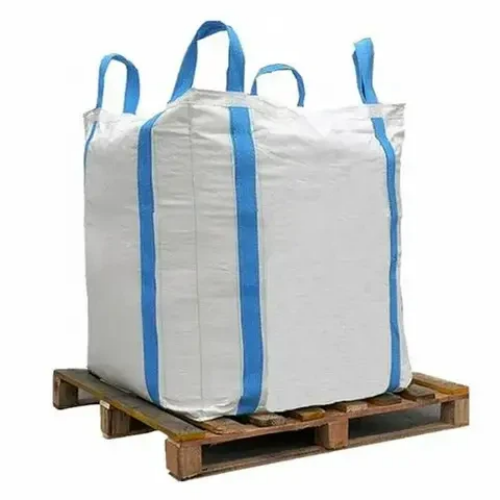
FIBCs are designed with built-in safety features to ensure that they can safely transport heavy and potentially hazardous materials. Many FIBCs come with lifting loops, spouts for filling and discharging, and optional liners for moisture control. Additionally, FIBCs are equipped with anti-static properties (Type C and Type D), which are essential when handling flammable materials. FIBCs undergo rigorous safety testing and certification, such as those meeting the ISO 21898:2004 standard, ensuring that they can handle their intended loads without compromising safety.
Feature | Polywoven Bags | FIBC Bags |
Capacity | Up to 50 kg | 500 kg to 2,000 kg |
Application | Suitable for small-scale loads | Ideal for large-scale industrial use |
Design | Simple, compact design | Heavy-duty, multi-panel design |
The most significant difference between polywoven bags and FIBCs is their size and capacity. Polywoven bags are typically limited to capacities of 50 kg, making them suitable for smaller and lighter loads. On the other hand, FIBCs are designed to handle much larger loads, with capacities ranging from 500 kg to 2,000 kg. FIBCs are preferred for large-scale operations that require the transportation of bulk materials like cement, sand, or chemicals.
Feature | Polywoven Bags | FIBC Bags |
Material | Woven polypropylene | Reinforced polypropylene |
Durability | Suitable for light to medium loads | High tensile strength, long-lasting |
Usage | Single-use or low-frequency use | Multiple-use, robust for heavy-duty applications |
FIBCs are made from stronger, thicker polypropylene fabric and are designed to withstand much higher loads than polywoven bags. While polywoven bags are strong enough for smaller loads, they are not as durable under extreme stress or for multiple uses. FIBCs are built with high tensile strength, capable of withstanding frequent use without degrading or losing structural integrity. They are also designed to handle rough handling and exposure to various elements, making them a better option for industrial-scale logistics.
Cost Factor | Polywoven Bags | FIBC Bags |
Initial Cost | Lower initial cost | Higher initial cost |
Long-Term Cost | Higher long-term costs due to limited lifespan | More cost-effective in the long run due to reusability |
Operational Efficiency | Less efficient for bulk operations | More efficient, reducing frequency of replacement |
Polywoven bags are typically more affordable than FIBCs due to their simpler construction and smaller size. However, while they have a lower initial cost, they are generally used for a shorter duration and are often considered single-use. FIBCs, on the other hand, are more expensive upfront due to their larger size, reinforced construction, and custom features. However, they offer better long-term value due to their durability and reusability.
Both polywoven bags and FIBCs are made from polypropylene, a recyclable material. However, FIBCs tend to have a longer lifespan due to their durability, which makes them a more environmentally friendly option in the long run. Although polypropylene is not biodegradable, both polywoven bags and FIBCs can be recycled at the end of their lifecycle, helping reduce waste. Jebic Packaging, a leading supplier of FIBCs, ensures that their products meet high standards of sustainability, offering bags that can be reused and recycled effectively.
FIBCs contribute to waste reduction in bulk operations by minimizing the need for additional packaging materials. Their large capacity means fewer bags are needed to transport the same volume of material, reducing the overall waste generated in the logistics chain. Polywoven bags, while effective for smaller loads, often generate more waste due to their shorter lifespan and smaller size.
Polywoven bags are ideal for businesses that deal with smaller quantities of materials. Their cost-effectiveness and ease of handling make them a great choice for packaging agricultural products, foodstuffs, and non-hazardous materials. For retail applications or smaller storage operations, polywoven bags offer an efficient and affordable solution.
FIBCs are best suited for industries that handle large quantities of materials and require durable, reusable packaging. With their high load-bearing capacity and customizable features, FIBCs are the preferred choice for bulk transportation in industries like construction, chemicals, and agriculture. If you are in need of packaging that can handle heavy loads and reduce operational costs in the long term, FIBCs are the optimal choice.
In conclusion, both polywoven bags and FIBCs are made from polypropylene and serve essential roles in packaging. However, their differences in size, durability, and handling make them suitable for distinct applications. Polywoven bags are perfect for smaller, cost-sensitive loads, while FIBCs provide superior strength and durability for large-scale industrial use. By understanding these differences, businesses can make informed decisions, ensuring efficiency, safety, and cost-effectiveness. Products from Jebic Packaging offer tailored packaging solutions to meet diverse operational needs, providing high-quality, reliable options for various industries.
For businesses with high-volume, heavy-duty bulk packaging needs, FIBCs offer greater long-term value due to their durability and reusability.
A: Polywoven bags are smaller, lightweight, and ideal for handling up to 50 kg of material. FIBCs, on the other hand, are designed for large-scale bulk transport and can handle loads up to 2,000 kg, offering greater strength and durability.
A: Polywoven bags are commonly used for packaging agricultural products, grains, and fertilizers. They are cost-effective and provide adequate protection for smaller loads in industries like retail and construction.
A: FIBCs are more suitable for large-scale industrial use, offering enhanced strength, reusability, and the ability to carry heavier loads. They are ideal for transporting bulk materials like cement, sand, and chemicals.
A: Yes, polywoven bags have a lower initial cost compared to FIBCs. However, for large-scale operations, FIBCs provide better long-term cost efficiency due to their durability and reusability.